Leaders, Heroes,and Role Models:
Who do we look up to and why?
The Report by:
Charles L. Kennedy
Senior Instructor
Department of Political Science
Penn State York
The Public Opinion Court focus group session was fittingly held
at the offices of the King of Prussia Chamber of Commerce at Valley Forge
on August 28, 2004 . The topic was “Role Models, Heroes, & Leaders.” The
members of the focus group discussed this issue in the same room where
George Washington, the first U.S. President, once dined. (The building
was originally constructed in the 1700s.)
It was a very diverse group that assembled at 9:00 a.m. —50%
were registered Republican, 33% Democrat, and 17% Independent. Fifty percent
were between the ages of 30-50; 33% were 50-65, and 17% were in the 18-30
age group. The male-female ratio was 58-42%, respectively. Regarding religious
affiliation, 33% were Protestant and 33% were Catholic; 17% were Jewish;
8% were Hindu; and 8% were Orthodox. Fifty percent had a college degree
or higher, and the other 50% were either high school or post-secondary
certificate.
LEADERS
Where have all the good men gone
And where are all the gods
Where's the street wise Hercules to fight the rise in us
Isn't there a white knight upon the Pirate seas?
HOLDING OUT FOR A HERO – Bonnie Tyler
Just as Bonnie Tyler deplored the lack of heroes in
her 1984 song, “Holding
Out for a Hero,” so did the members of the focus group. On the statement, “We
currently live in an age without heroes.” Seventy-five percent (75%) of
the group either agreed or strongly agreed. They seemed to reflect the
cynicism that is so rampant in contemporary American society, particularly
regarding political leaders.
When asked to name four or five people “living today whom you consider
to be great leaders,” Bill Clinton was listed by 25% of the respondents;
Rudy Giuliani and Oprah Winfrey by 17% each. Significantly, neither President
Bush nor Senator Kerry received any support.
The group also reflected “the cynicism of a cynical
age” when 75% either
agreed or strongly agreed with this statement, “America's leaders today
do not live up to the standards of the great leaders from our nation's
past.”
Interestingly, the primary standard that the group considered “the single
most important personal characteristic or quality that you look for in
a leader” was honesty. Fifty percent of the group felt strongly about
the point. It should also be emphasized that honesty was also the most
important trait that the group looked for in a role model.
Whereas, the group struggled to cite many contemporary great leaders,
they had no problem listing several great leaders who are no long living.
The most frequently cited were:
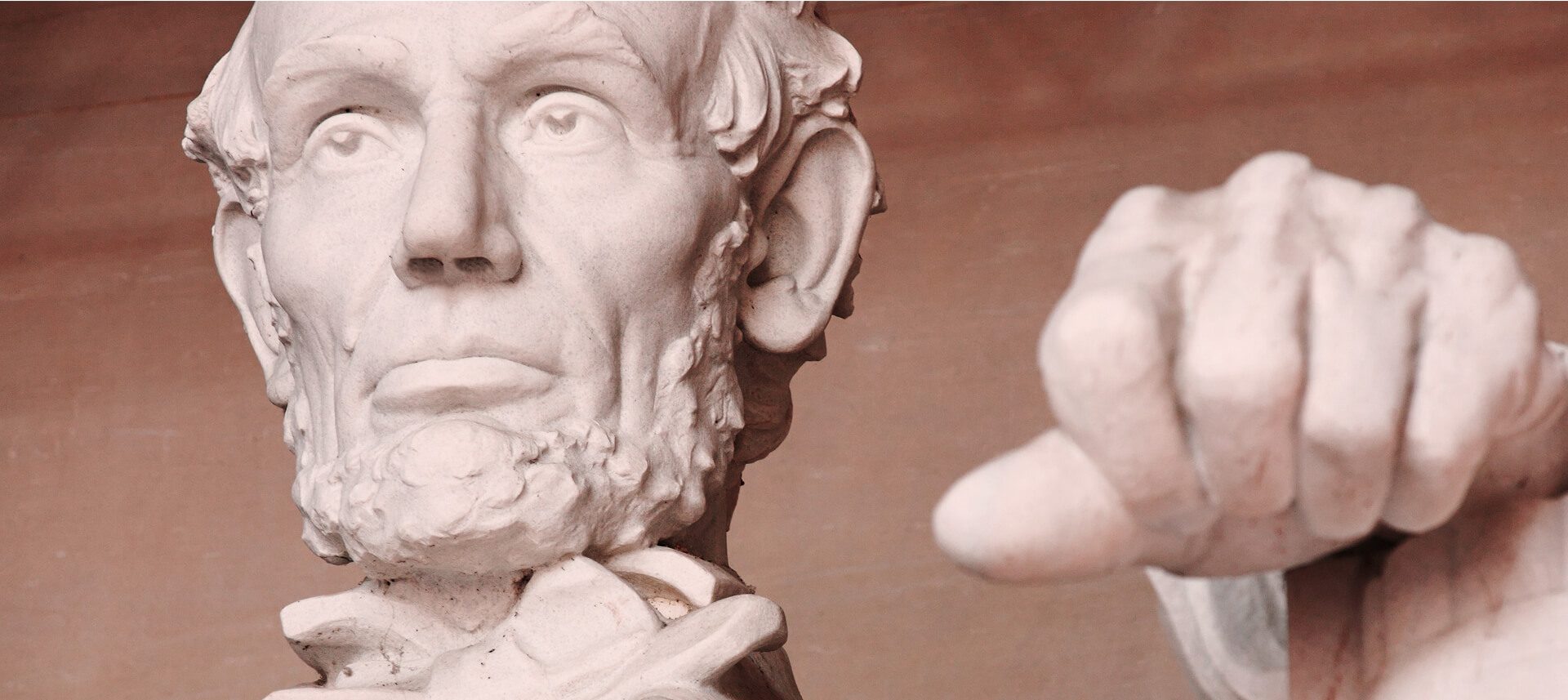
Abraham Lincoln 58%
Ronald Reagan 42%
John F. Kennedy 33%
George Washington 33%
Thomas Jefferson 25%
Dwight Eisenhower 17%
During discussion the issue came up that in contemporary society, it
was difficult to be considered a great leader, when there is such
instantaneous and around-the-clock coverage by the news media. The emphasis
on negative campaigning was also examined. The group was divided and inconclusive
when asked to address the question: “Who is responsible for negative campaigning—the
politicians, who develop the negative ads and speeches; the news media,
because this is what they emphasize and focus on; or we the people, because
this is what we pay attention to.” The group was relatively inconclusive,
but did agree that “there was plenty of blame to go around.”
The idea of a charismatic leader was also addressed.
The group was asked to address the issue as to whether the county needed
a charismatic leader today. During discussion it was brought up that the
charismatic leader is inspirational, gets people “all fired up,” tends to see solutions in
black and white, and is usually very divisive. The moderator quoted Charles
DeGaulle of France about Winston Churchill of Great Britain (two charismatic
leaders), “He gets angry when he is wrong, and I get angry when I am right.
We are very angry at each other all the time.”
When asked to name an outstanding leader from the business or corporate
world, Donald Trump received 35% support from the group; Bill Gates and
Oprah Winfrey 17%. The traits that were considered most important were
hardworking, motivated, and creative.
For outstanding leaders in the world of religion, Pope John Paul II
was listed by 25%, and in the world of sports, Joe Paterno was listed
by 17%. Interestingly, the traits of honesty, personal character, and
compassion were among the traits cited as important for leadership in
both the world of sports and religion.
For an outstanding leader in the world of politics and government, President
Bush was cited by 17%. No other leader received double figures. Conversely,
Senator Kerry was not listed at all.
HEROES
I need a hero
I'm holding on for a hero until
the end of the night
He's gotta be strong and he's gotta be fast
and he's gotta be fresh from the fight
HOLDING OUT FOR A HERO – Bonnie Tyler
Fifty-eight percent of the focus group ranked a father or grandfather
as a hero. The main traits that made these people a hero was: hardworking,
honest, compassionate, and self-sacrificing. On the item of ranking a
living person that they did not know, but considered a hero, 33% listed
a firefighter. The key trait that they listed was that “they risk their
life, to help others.” During discussion of this issue, the group expanded
their definition to include “risking their health, wealth, reputation,
and position to help others.”
The group was also asked to rate occupations or functions
on a scale of one to five—with one being the most heroic and five being
the least heroic. The top five positions were:
Avg. Score
Parent 1.9
Member of the Armed Forces 2.0
Teacher 2.0
Policeman 2.1
Firefighter 2.1
The moderator (a teacher) found it interesting that
many considered teachers heroic. He commented that he hoped, “I was a role model to many
and was proud to be a role model, but I don't consider myself heroic.” This
also led to considerable discussion among the group and an emphasis on “the
positive impact that a teacher has on so many.”
At the opposite end of the scale were:
Avg. Score
Small business person 3.1
Blue collar worker 3.2
CEO of a major corporation 3.3
Elected official 3.5
Movie star 4.2
Listed in the middle of the pack in order were: Astronaut,
Clergy, Organ Donor, Doctor, Professional Athlete, Social Service
Volunteer, and Homemaker.
On the always interesting and thought provoking question
of, “If you
could have dinner alone with one person, currently living who you do not
know personally, who would you choose?” The leading vote getter was President
George W. Bush with 33%. The reasons included: to understand his thoughts
and pressures, to discuss Iraq , and to discuss education. The other
leader vote getters were former President Bill Clinton and Oprah Winfrey.
Interestingly, President Bush's opponent, Senator John F. Kerry, was not
mentioned.
On the same question, but with “somebody who is no longer living,” there
was a wide range of responses including Benjamin Franklin, Thomas Jefferson,
Albert Einstein, John F. Kennedy, John F. Kennedy, Jr., Jackie Kennedy
Onassis, Princess Diana, and Franklin D. Roosevelt.
ROLE MODELS
It's gotta take a superman
to sweep me off my feet
I need a hero ... I'm holding on for a hero …
He's gotta be larger than life.
HOLDING OUT FOR A HERO – Bonnie Tyler
On the issue of role models in their personal lives, 50% listed their
father or grandfather. In second place was a teacher with 25%. The major
traits that they listed for father/grandfather were hardworking, honest,
compassionate, and positive. The major traits for the teachers were honest,
challenging, and thoughtful.
On the question of “people who you do not know personally, but consider
to be a role model,” the leading vote getter was Oprah Winfrey with 25%.
She was described as honest, hardworking, determined, and caring. Former
President Ronald Reagan came in second at 17%. Reagan was described as
optimistic, strong character, dedicated to values, and strong convictions.
When asked to rate several qualities of a role model on a scale of one
to five with one being most important and five least important, the top
three responses were:
Avg. Score
Honesty 1.8
Integrity/Ethical 2.1
Respects Others 2.1
Those qualities on the bottom end of the scale were:
Avg. Score
Religious/Spiritual 3.3
Entrepreneurial/Takes Risks 3.3
Challenges Authority 3.5
The other qualities listed in the middle in order were: hardworking,
leadership ability, knowledgeable and smart, self assured and confident,
creative and innovative, plays by the rules, and achieves success.
When asked what they considered the most important measure of success:
- 90% disagreed or strongly disagreed that it is “how much money a
person makes.”
- 75% agreed that it is “how others think of you.”
- 100% agreed or strongly agreed that it is “what a person does to
help others.”
It is interesting that the basic character traits of honesty, hardworking,
compassionate, and positive that the group identified as most important
in a role model are the same traits that were intertwined with the selection
of heroes and leaders. If this focus group is a harbinger of public opinion
(and most tend to be), then President Bush and Senator Kerry would be
well advised to take heed. The focus group is telling them that the candidate
who best conveys the traits of honesty, compassion, hardworking, and positive
outlook will be elected President. This is what the people want in a role
model, a hero, and a leader.
Intro | Survey | Survey
Analysis | Focus Group Entry | Focus
Group Report
Close this window |